Our precious wood is stored for many years until it can be used to make flutes.
Making a flute
-
Raw wood
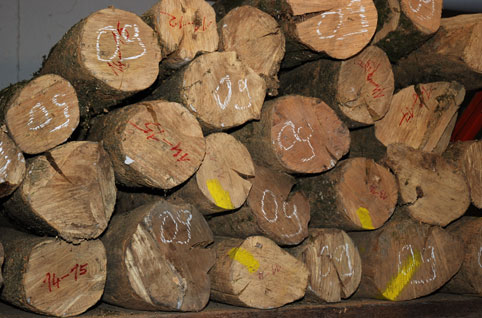
-
Selection
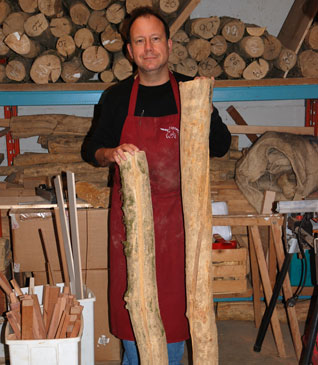
Only the best wood is used – spiral-grained branches (right) are discarded
-
Workpiece
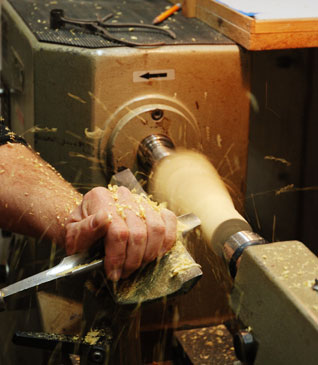
A blank is turned into a roughly round workpiece
-
Impregnation
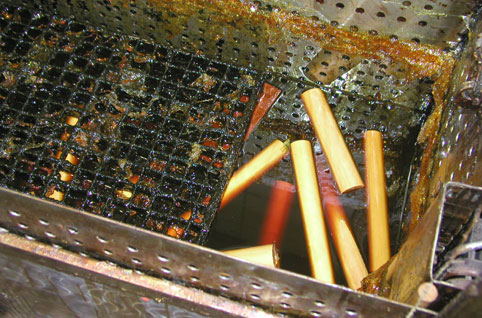
The rounded and drilled workpieces are soaked and impregnated with hot linseed oil.
-
Bore
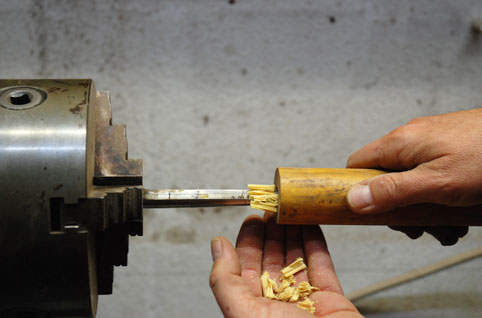
The bore is made with a reamer
-
Preliminary turning
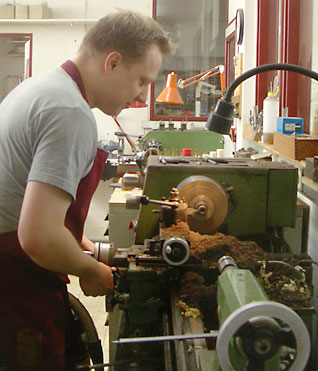
A lathe is used for the preliminary turning
-
Turning
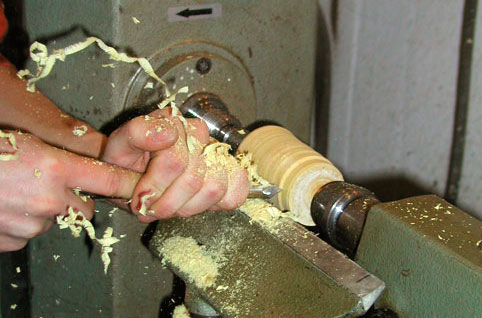
The shape is turned roughly on the turning lathe.
-
Final turning
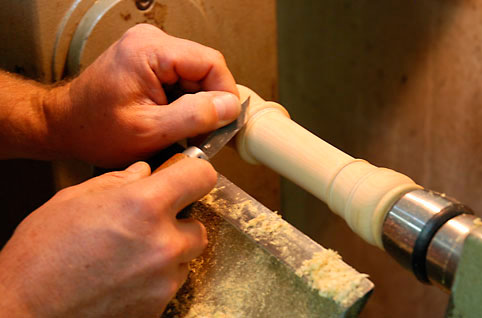 The final shape is turned and then sanded down
-
Staining
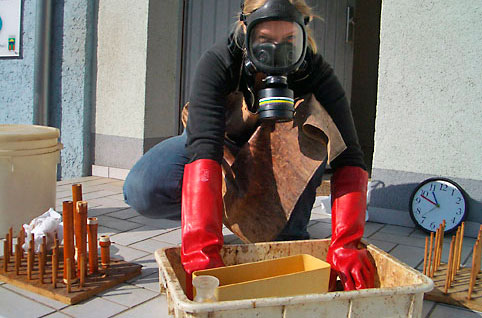
First staining process using acid and alkaline
-
Staining and surface
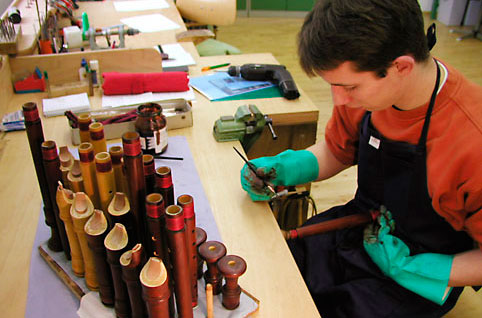
Second staining process using plant dyes and covering with violin varnish
-
Violin varnish
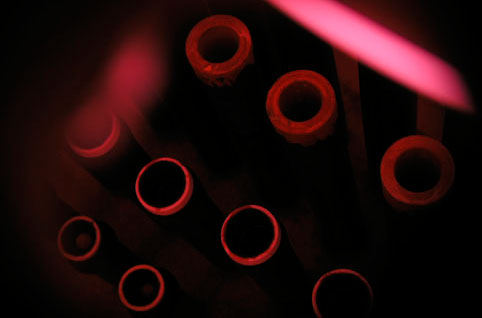
Several different processes of applying violin varnish and hardening it under UV light
-
Finger holes
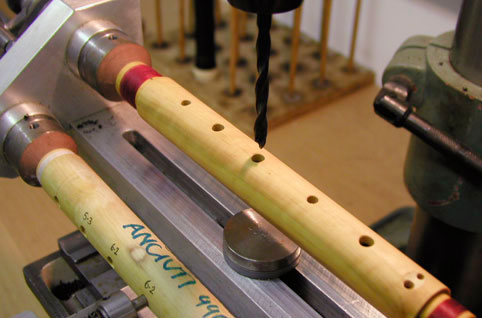
The position and size of the finger holes are crucial
-
Cutting out the windway
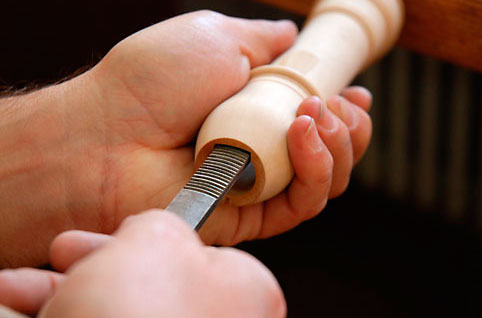
The windway is cut out
-
Labium
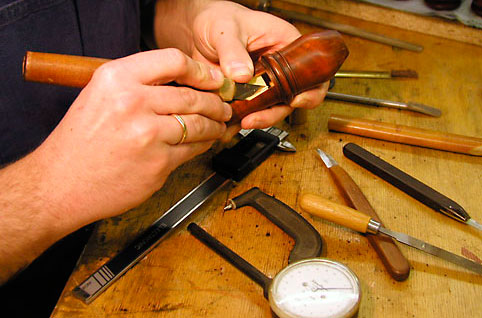 Labium is cut
-
Block
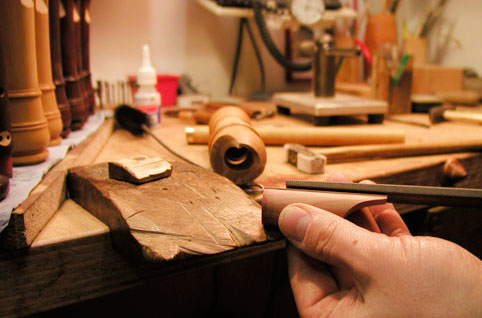
The block is fitted and then the recorder is played in and adjusted several times
-
Keys
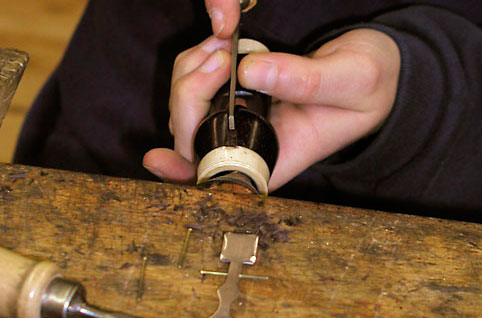
Our keys are generally made from silver and are intricately fitted by hand with utmost precision
-
Embouchure
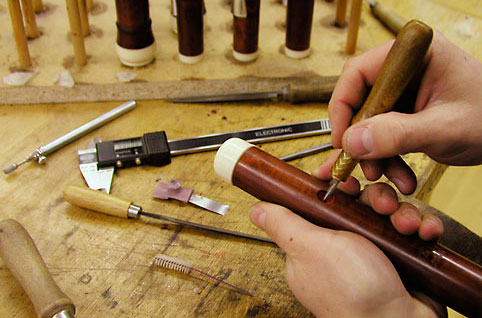
The embouchure is made using a knife and file with extreme precision- a very tricky process
-
Stamp
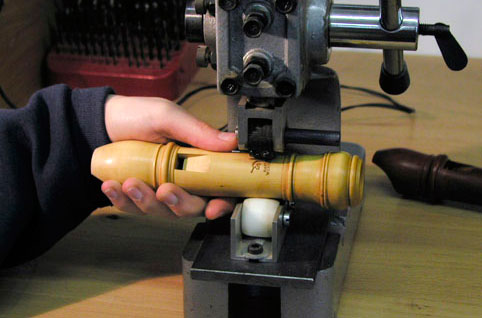 Only perfect instruments are stamped with the sign of a unicorn
-
Measurement control and trying-out
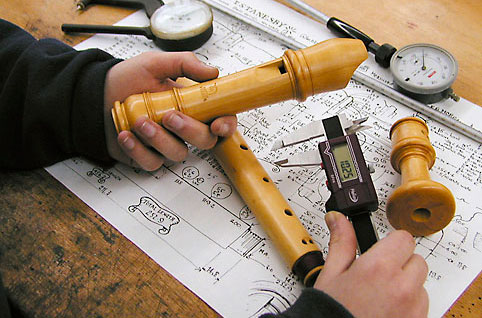
Measurement control is always necessary, even on finished instruments. Finished instruments are played and then reworked